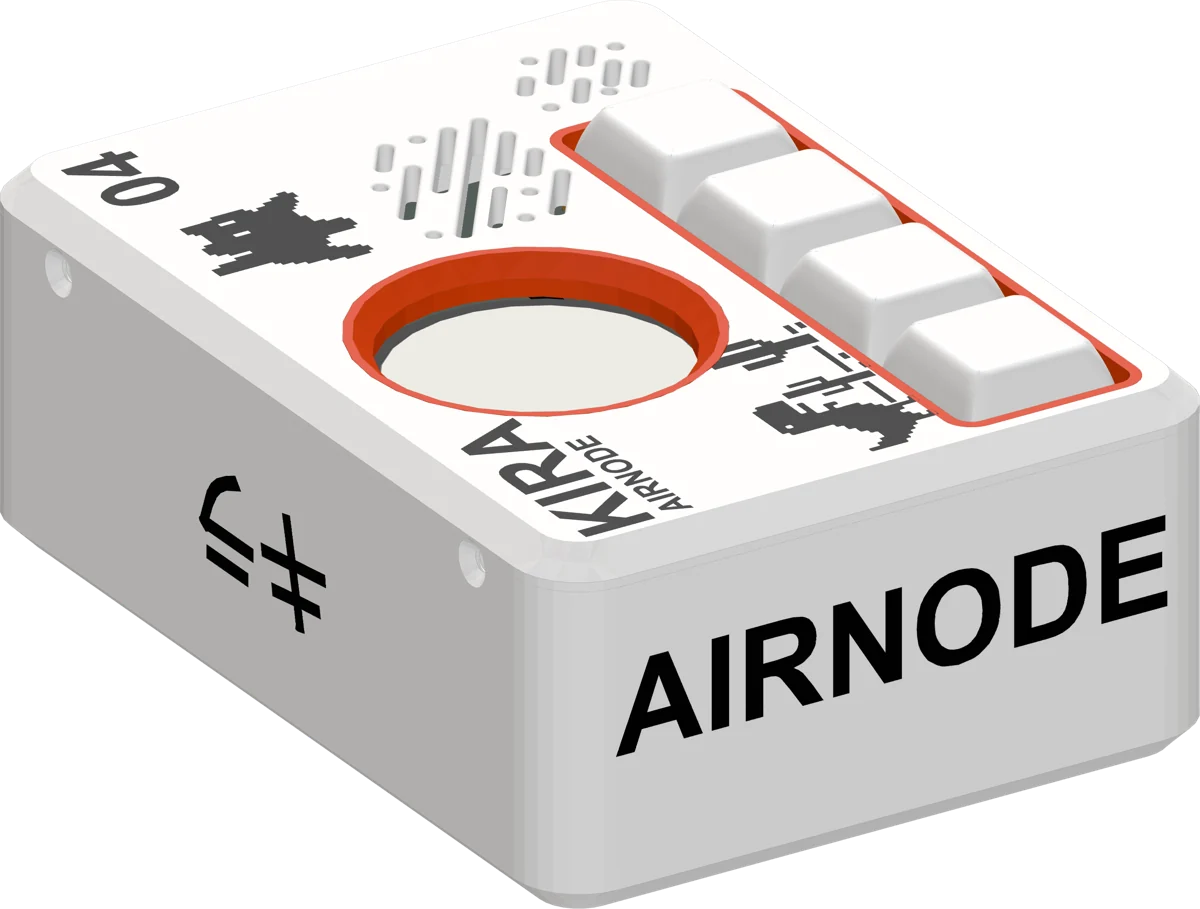
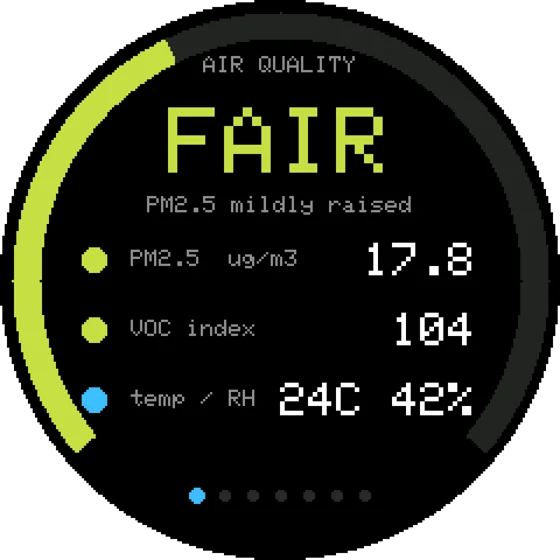
AirNode measures CO₂, fine dust, VOCs, temperature and humidity, shows them on a round pixel display, and tells Home Assistant to switch on the fan when the air gets stale. Build it from a kit, or flash the free firmware onto your own board.
Bad air is invisible.
In a closed bedroom, CO₂ from breathing builds up all night without any warning. AirNode watches it and switches on the exhaust fan when it passes 1000 ppm, a common ventilation guideline. It switches the fan off again once the air drops below 800 ppm.
Try it: play a night in the room, or drag the slider yourself.
Four sensors. Fit the ones you need.
All four Sensirion sensors share one I²C bus and plug into their own headers. The particle and CO₂ sensors are the expensive parts, so both are optional. Firmware 1.1 finds whatever is fitted at power-up and simply leaves the rest out, on the screen and in Home Assistant.
Is the room comfortable, too dry or too damp?
Fumes from cooking, cleaning products, paint and new furniture.
A laser counter for dust, smoke and pollen. It cleans its own fan.
True CO₂, the clearest sign a room needs fresh air.
A round screen you can read from across the room.
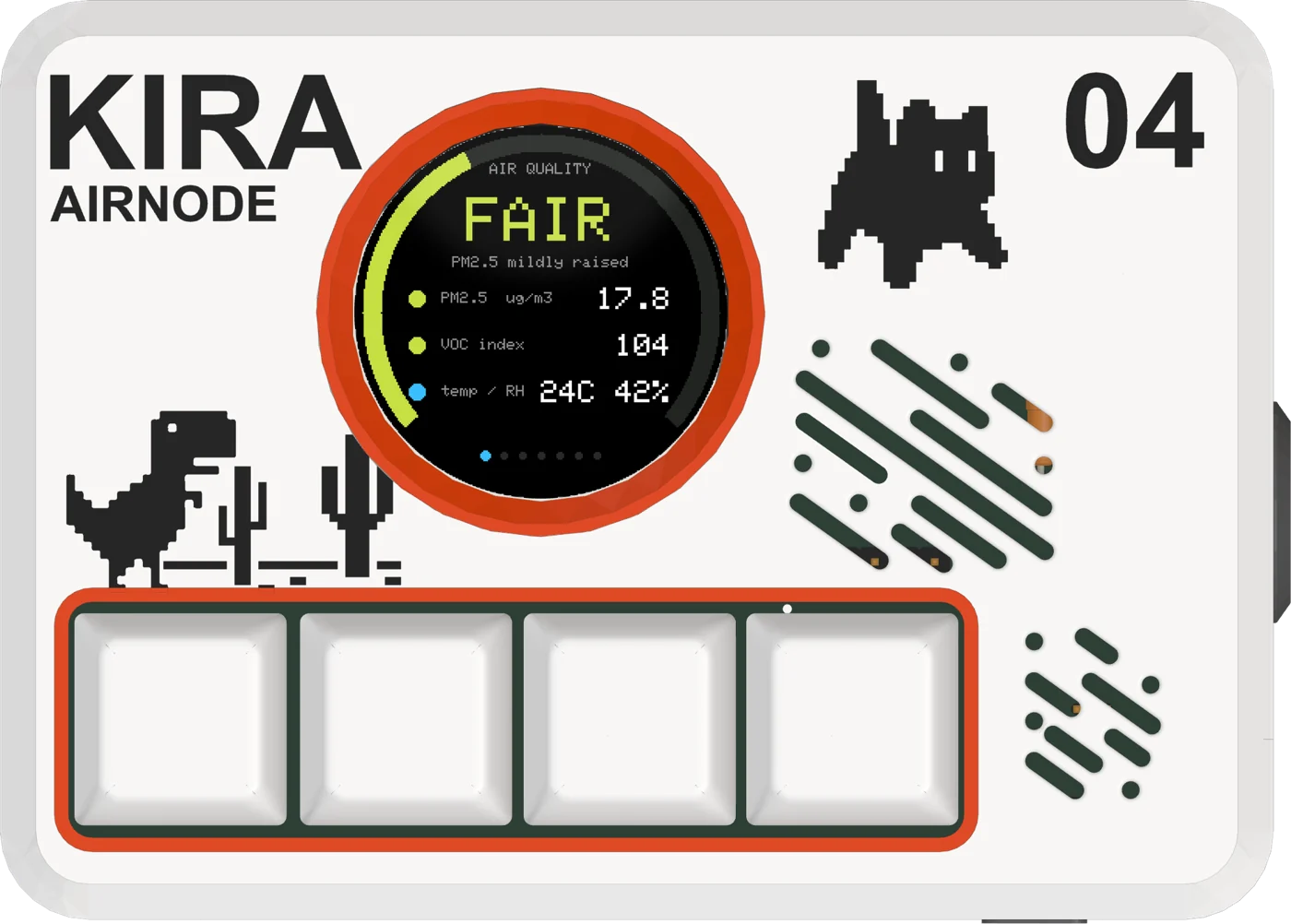
A 1.28″ round display and four mechanical keys. Scroll, or press the keys, to step through the pages.
Works with Home Assistant, with no setup.
AirNode joins your Wi-Fi and announces itself with MQTT auto-discovery, so it shows up in Home Assistant by itself. From there it can run the exhaust fan.
sensor.airnode_co2640 ppmsensor.airnode_temperature24.1 °Csensor.airnode_humidity42 %sensor.airnode_pm2_517.8 µg/m³sensor.airnode_voc_index104switch.exhaust_fanAir that fixes itself.
- Two thresholds keep the fan from flicking on and off.
- If AirNode goes offline for 10 minutes, the fan turns off.
- Wi-Fi and MQTT reconnect on their own, and the screen keeps working without them.
- The automation YAML ships with the firmware download.
A custom PCB in a case made for the wall.
A two-layer board designed in KiCad around an ESP32-C3. Every part is through-hole, so you can solder it by hand.
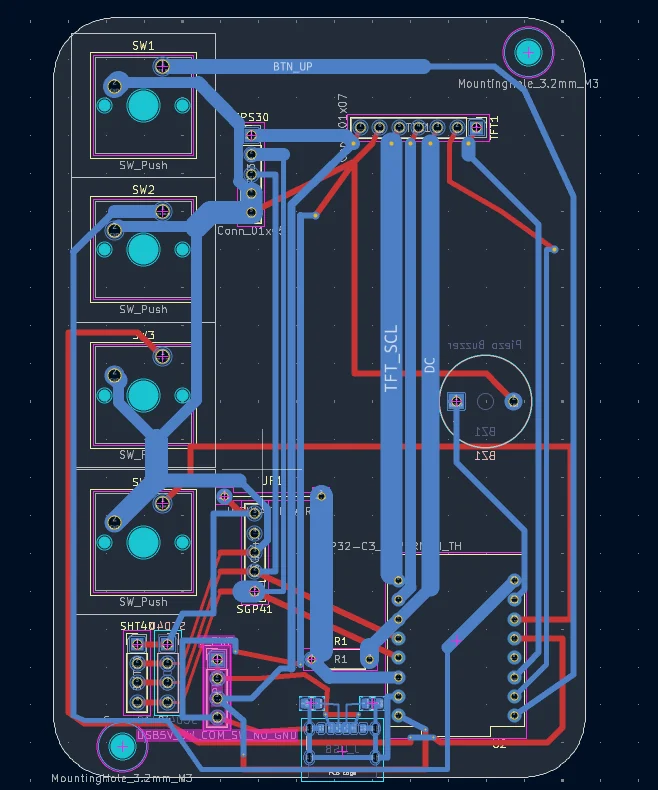
Two layers, all through-hole
Keys on the left, ESP32-C3 bottom right, sensor headers bottom left.
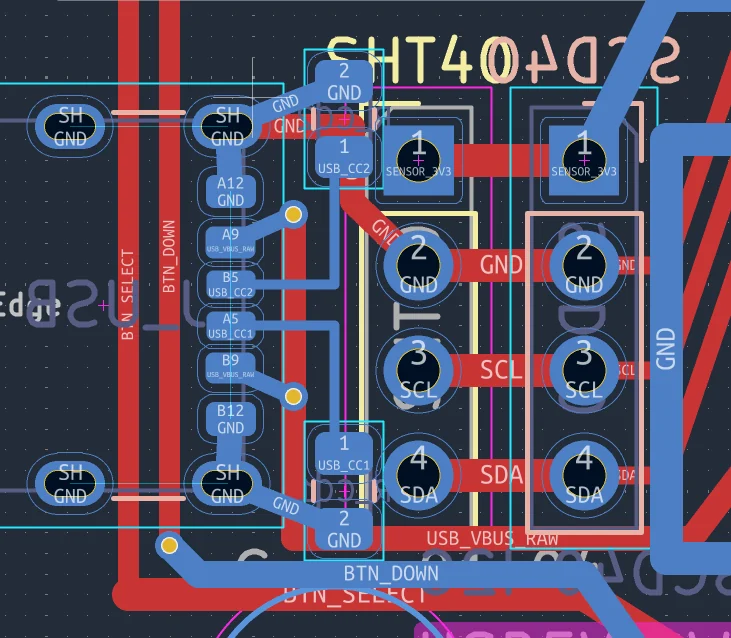
USB-C power
5.1 kΩ resistors on the CC pins mean any USB-C charger supplies 5 V. A power switch feeds a separate 3.3 V sensor rail.
Five board revisions
3D-printed case
Keycap cut-outs, a display window and vents over the gas sensors.
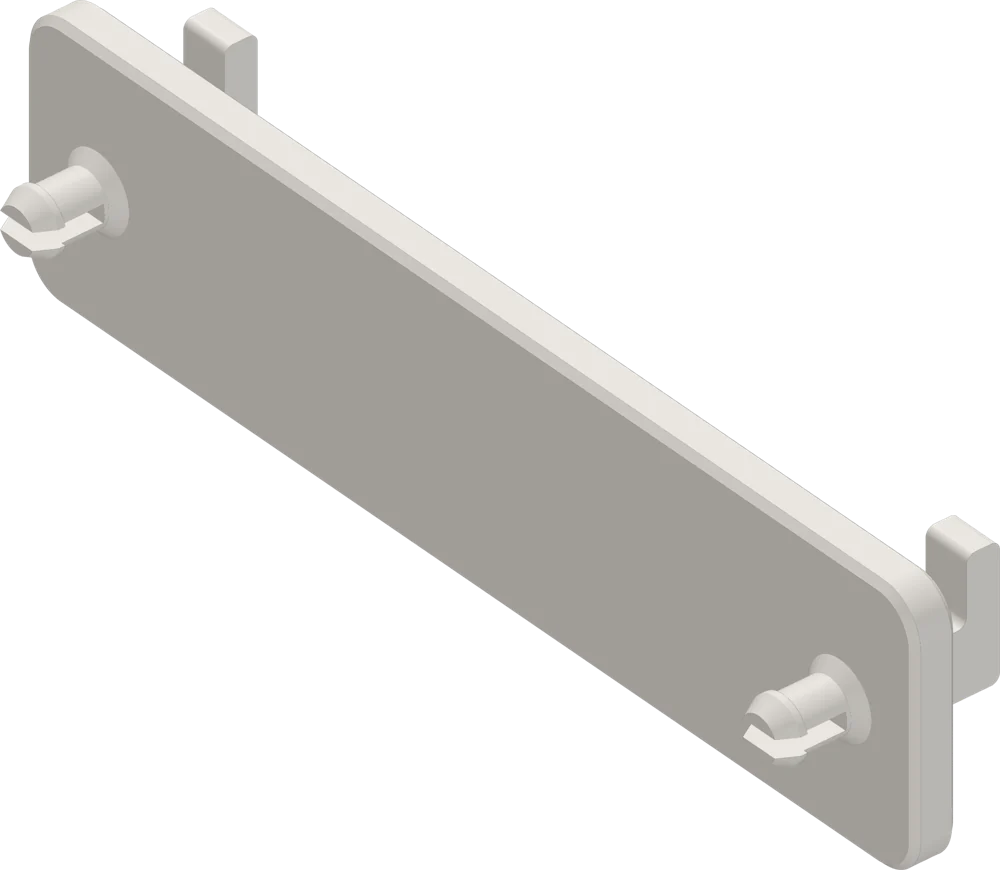
Skådis mount
A parametric bracket that snaps onto an IKEA pegboard.
A fraction of the price.
Parts for one AirNode, from a basic build (temperature, humidity, VOC, NOx) to a full build with the particle sensor. PCBs sponsored by PCBWay.
AirNode figures are parts cost. Others are listed retail prices, November 2026. Most include CO₂.